In 2020, IBM was nowhere in organic search. My team was given the ambitious goal of making it #1 in the next 5 years. To succeed we would have to author content that could compete with the likes of AWS and Google in a domain they had more or less created.
Since then I’ve written more than a hundred pieces—and the team, thousands. I’ve had to take subjects most people actively avoid (maintenance software, ISO compliance, IT asset recovery) and make them readable enough for a plant manager and rigorous enough for the engineer standing behind him and fact-checking my words.
The result? Last year, IBM passed TechTarget in unbranded, organic search to became the #1 brand in B2B tech.
#1 ranking in B2B tech for unbranded, organic search
80% increase in conversion rate YoY
$400M equivalent value of organic traffic
IBM Think —Enterprise content
Agency/Client
IBM
Work
B2B Thought leadership content
Role
Author
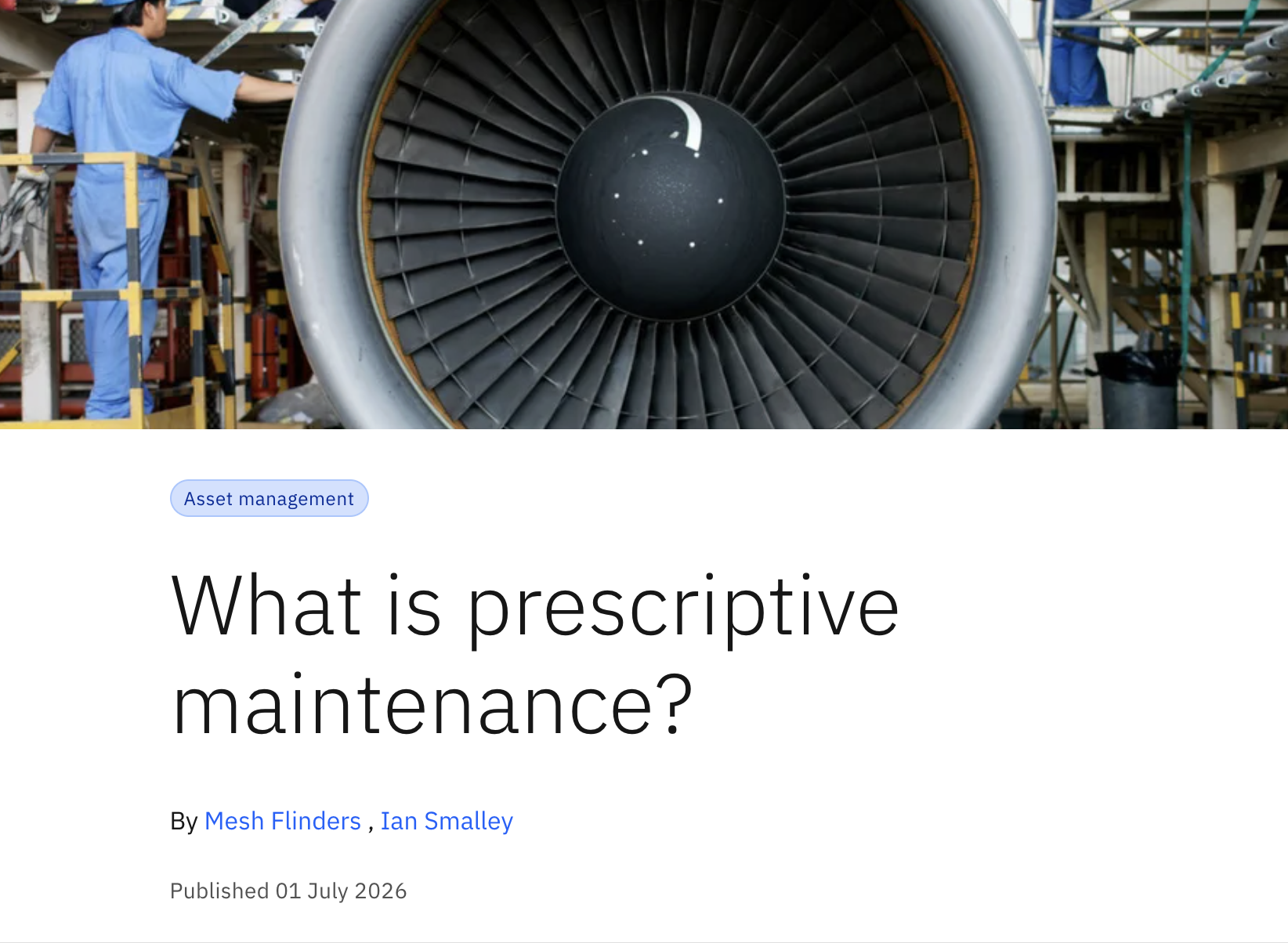
This is the piece I'm proudest of on the maintenance beat. Prescriptive maintenance is the industry's next step past predictive, not just "this will fail" but "here's exactly what to do before it does."
I mapped the five-phase process end to end and grounded every claim in numbers, then fact-checked the bejesus out of it because—honestly—I didn’t understand some of the words I was using. The result reads more like a case for why bad data quietly kills good AI investments than a wikipedia entry. I’m proud of it.
Facilities management sounds like janitorial services but it's actually the discipline holding hospitals, airports and data centers together. I split the piece into two sections to reflect the way facilities managers actually talk about it: "Hard FM" (the physical systems) versus "soft FM" (the human side.)
Then I built out six specific FM roles so a reader could see exactly where their job might fit. Smart buildings got their own section because that’s where most of the growth is. Voila—everything you ever wanted to know about facilities management but were afraid to ask.
IBM needed a foundational explainer on computerized maintenance management systems (CMMS) that could rank on Google, hold the attention of a capital planner who's never heard the acronym before, and still satisfy a maintenance technician who's run one for fifteen years.
So I built it in layers, plain-English definition up top, real industry use cases (manufacturing, healthcare, government, etc.) further down and let the reader choose how deep to go. It's since become one of IBM's most durable pages, updated and re-ranking years after publish.
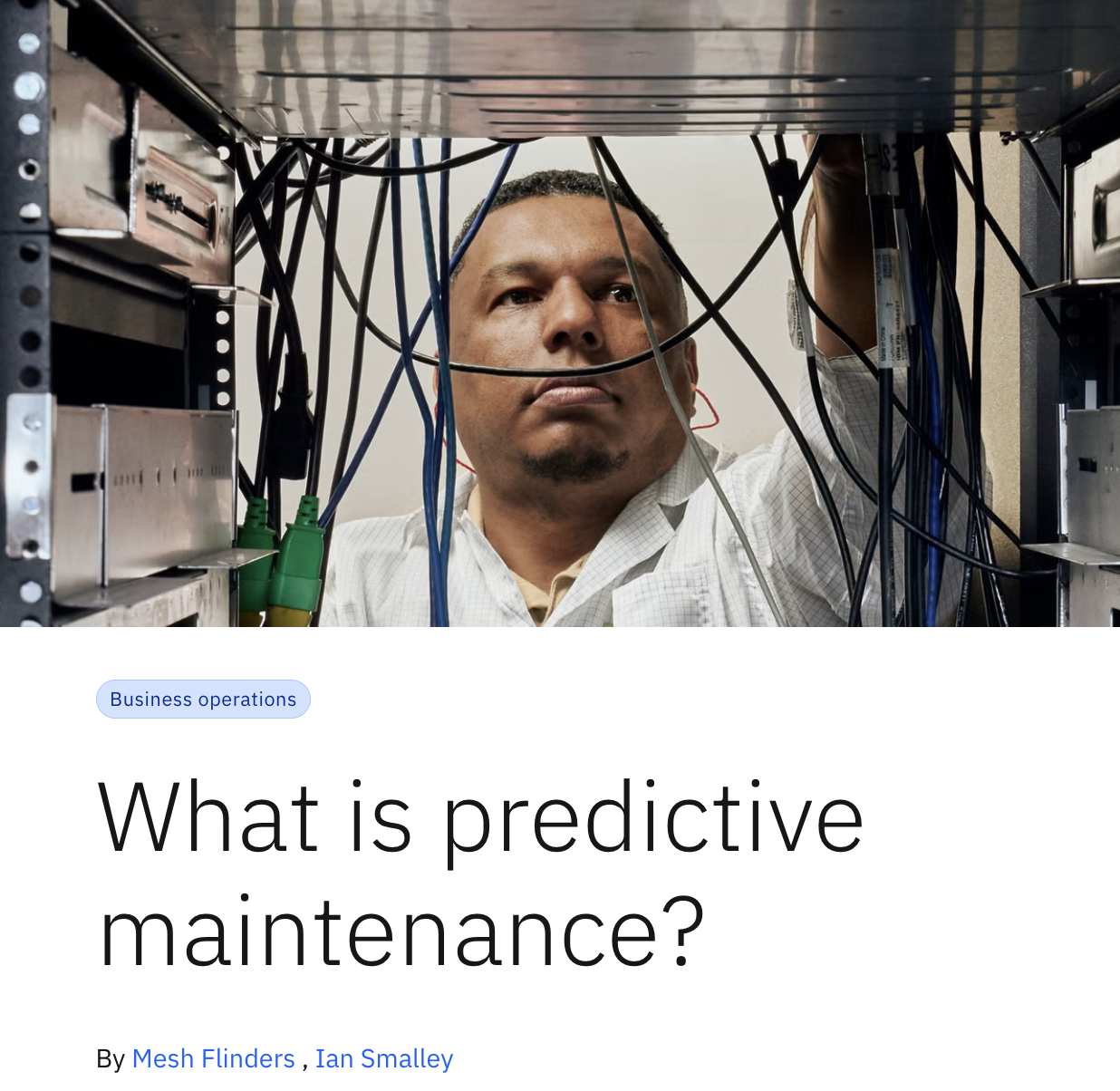
Everyone confuses predictive maintenance with the preventive kind, and vendors are happy to let them. My job was to draw the line so a reader could tell the difference in one paragraph, then make the case for why it matters—down to the five specific ways technicians actually detect a problem.
Heavy on research, sourced against industry cost data I chased down and verified myself rather than recycling secondhand stats.
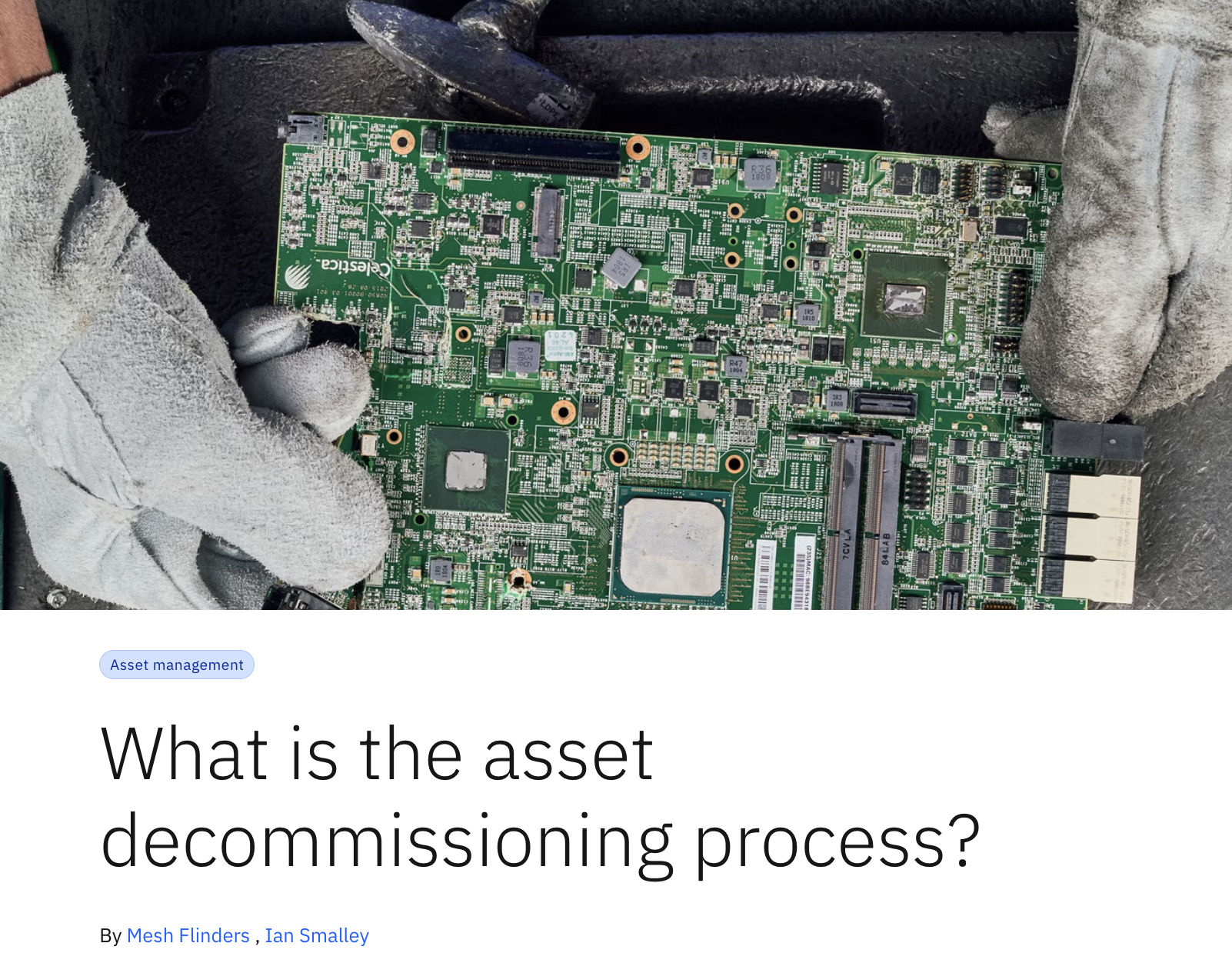
Decommissioning is the part of the asset lifecycle nobody thinks about until a laptop full of sensitive data turns up in a landfill or a lawsuit. The closest normal people ever get to it is the printer/baseball-bat scene from Office Space… But I don’t write for normal people.
I mapped the full seven-step process—identification through certification, chain of custody, data sanitization and physical destruction. All the boring stuff that unfortunately can get you sued if you half-ass it. I worked until the piece made the reader feel like they were standing in the room where the shredding was happening. For better or worse.